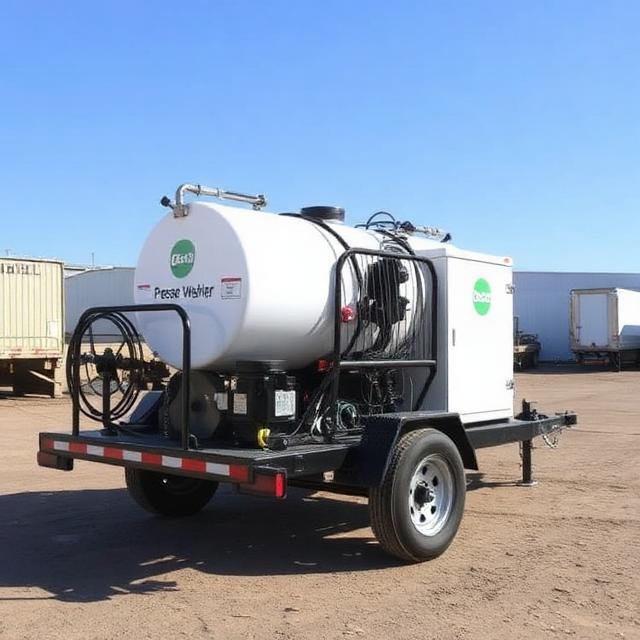
If you are serious about starting or scaling a professional cleaning business, a pressure washer trailer is one of the most important investments you will ever make. Unlike portable units that require constant reloading or commercial trucks with fixed setups, a pressure washer trailer gives you the perfect combination of mobility, power, water capacity, and professional appearance — all in one compact, road-ready package. Whether you are washing driveways, fleet vehicles, commercial buildings, or even offering wash n dry services to your community, understanding exactly what goes into a top-tier trailer setup will separate your business from competitors who are still using undersized equipment.
This article breaks down everything you need to make the smartest buying or building decision possible — from trailer types and pressure ratings to water tanks, hose reels, engine specs, and real-world profitability data. Let’s get into it.
What Is a Pressure Washer Trailer and Why Does Your Business Need One?
A pressure washer trailer is a purpose-built or custom-assembled mobile unit that houses a high-powered pressure washer, a water storage tank, hose reels, and all associated equipment on a single towable trailer frame. These units are towed behind pickup trucks or vans and allow cleaning professionals to bring their full operation — water supply, cleaning chemicals, and high-pressure equipment — directly to the job site without relying on the client’s water source or power grid.
The demand for professional pressure washing services has grown substantially over the past decade. According to the IBISWorld Pressure Washing Industry Report, the U.S. pressure washing industry generates over $1.2 billion in annual revenue and has grown at an average rate of 3.8% per year. A growing number of entrepreneurs are entering this market, and those who invest in a quality pressure washer trailer from day one consistently outperform operators using portable or truck-mounted alternatives.
Here is why a trailer-based setup makes strategic sense:
- Independent water supply — Large onboard tanks (200–500+ gallons) eliminate dependence on client water access
- Higher flow rates and PSI — Trailer units support commercial-grade engines running 3,000–8,000+ PSI
- Faster job completion — Organized hose reels, chemical tanks, and equipment save 30–60 minutes per job
- Professional image — A branded, well-organized trailer signals credibility to clients
- Scalability — Trailers can be upgraded with additional hose reels, tanks, or surface cleaners as the business grows
- Tax advantages — Equipment trailers are depreciable business assets under IRS Section 179
“Investing in a professional pressure washer trailer setup was the single best decision I made in my first year. My average job ticket went up by 40% simply because clients trusted me more.” — Mike R., owner of ProWash Solutions, Texas
Types of Pressure Washer Trailers Explained
Not all pressure washing trailers are built the same. The type you choose should match your target market, service offerings, and budget. Below is a breakdown of the most common trailer configurations used in the industry today.
Single-Unit Pressure Washer Trailers
These are the most common entry-level trailer setups. A single pressure washer — typically a gas-powered cold water unit rated between 3,000 and 5,000 PSI — is mounted on a small 5×8 or 6×10 trailer frame alongside a 100–200 gallon water tank. They are ideal for residential driveway washing, fence cleaning, and small commercial contracts.
Typical specs:
- Trailer size: 5×8 to 6×12 feet
- Engine: Honda GX390 or Vanguard 18 HP
- Pump: General Pump or AR Pump, 4.0 GPM
- Water tank: 100–200 gallons
- Hose reel: Single 200-foot reel
- Price range: $3,500 – $8,000
Dual-Unit Hot and Cold Water Trailers
For operators targeting restaurant hood cleaning, fleet washing, and grease removal, a dual-unit trailer with both hot and cold water capability is essential. Hot water pressure washers use a diesel-fired burner or electric coil to heat water to 140–180°F, which dramatically improves cleaning power on oils, grease, and bio-contamination.
Typical specs:
- Trailer size: 8×16 to 8×20 feet
- Engines: Dual Honda GX690 or Kohler Command Pro 27 HP
- Pressure: 3,000–5,000 PSI per unit
- Flow rate: 5–8 GPM combined
- Water tank: 300–500 gallons
- Price range: $12,000 – $35,000
Skid-Mounted Pressure Washer Trailer Systems
Skid-mount systems are modular units where the pressure washer, engine, pump, and hose reel are mounted on a steel or aluminum skid frame that can be slid in and out of a trailer or truck bed. This offers maximum versatility because the same skid can serve multiple vehicles.
Best for:
- Businesses that own multiple vehicles
- Operators who need flexibility between truck and trailer use
- Contractors who want to upgrade incrementally
Industrial-Grade High-Volume Pressure Washer Trailers
These are the heaviest-duty configurations used by industrial cleaning companies, municipalities, and large commercial contractors. Ratings can reach 8,000–10,000 PSI with flow rates of 12+ GPM. These setups often include diesel engines, large-capacity chemical injector systems, vacuum recovery tanks, and enclosed trailer bodies for weather protection.
Price range: $40,000 – $100,000+
Pressure Washer Trailer Specifications: What the Numbers Actually Mean
Understanding the technical specifications of a pressure washing trailer is critical before making a purchase. Many buyers focus exclusively on PSI (pounds per square inch) while ignoring equally important metrics like GPM, engine horsepower, and hose diameter — mistakes that lead to underperforming equipment and frustrated customers.
PSI vs. GPM: The Most Misunderstood Specs
PSI measures the force of the water stream. GPM (gallons per minute) measures the volume of water delivered. Neither metric alone tells the full story. The real measure of cleaning power is Cleaning Units (CU), calculated as:
Cleaning Units = PSI × GPM
| PSI | GPM | Cleaning Units | Best Application |
|---|---|---|---|
| 2,000 | 2.0 | 4,000 CU | Light residential |
| 3,500 | 3.5 | 12,250 CU | Mid-grade residential/commercial |
| 4,000 | 4.0 | 16,000 CU | Heavy commercial |
| 5,000 | 5.0 | 25,000 CU | Industrial/fleet |
| 8,000 | 8.0 | 64,000 CU | Heavy industrial |
For most professional pressure washer trailer operators serving both residential and light commercial clients, targeting 10,000–20,000 Cleaning Units is the sweet spot — powerful enough for serious work, manageable enough to avoid surface damage on softer materials.
Engine Horsepower and Pump Compatibility
The engine must be properly matched to the pump’s GPM and PSI demands. Underpowering the pump leads to cavitation — a condition where the pump draws more water than the engine can deliver, causing accelerated internal wear and inconsistent pressure output.
General guideline: For every 1 GPM of flow at 1,000 PSI, you need approximately 1 horsepower (HP) of engine output.
| Flow Rate | Pressure | Required HP |
|---|---|---|
| 4 GPM | 3,500 PSI | ~14 HP |
| 5 GPM | 4,000 PSI | ~20 HP |
| 8 GPM | 5,000 PSI | ~40 HP |
Top engine brands used in professional trailer builds:
- Honda GX Series — Most popular, known for reliability and easy parts availability
- Briggs & Stratton Vanguard — Strong torque output, commercial-grade
- Kohler Command Pro — Excellent in high-temperature environments
- Kubota Diesel — Best for heavy industrial and continuous-run applications
How to Build a Custom Pressure Washer Trailer: Step-by-Step
Building your own custom pressure washer trailer can save you 30–50% compared to buying pre-built, while giving you complete control over specs, layout, and branding. Here is a step-by-step overview of the process.
Step 1 — Choose Your Trailer Frame
Start with a utility trailer rated for at least 3,500 lbs GVWR. For most single-unit builds, a 6×12 or 7×14 trailer with a mesh or diamond plate steel deck works well. For dual-unit builds, go with an 8×16 or larger. Key considerations:
- Single vs. tandem axle — Tandem axle trailers provide better stability and allow heavier payloads
- Frame material — Steel is cheaper; aluminum is lighter and rust-resistant
- Ramp gate — Useful if you need to load additional equipment like surface cleaners or generators
- Tongue weight — Should be 10–15% of total loaded trailer weight for safe towing
Step 2 — Select and Mount the Water Tank
The water tank is the heart of your pressure washing trailer. Selecting the right tank size depends on your primary job types:
| Service Type | Recommended Tank Size |
|---|---|
| Residential driveways | 100–200 gallons |
| Commercial buildings | 200–300 gallons |
| Fleet/vehicle washing | 300–500 gallons |
| Industrial/municipal | 500–1,000+ gallons |
Critical mounting notes:
- Center the tank over the trailer axles to balance weight distribution
- Use non-slip tank straps rated for at least 2x the full water weight (water weighs 8.34 lbs per gallon)
- Install a sight glass or tank gauge for real-time monitoring
- Use polyethylene (poly) tanks — they are UV-resistant, chemically compatible with most detergents, and lightweight compared to steel
Step 3 — Install the Pressure Washer Engine and Pump
Mount the engine and pump assembly using vibration-isolating rubber mounts to reduce wear on both the frame and the pump seals. Position the unit as close to the center of the trailer as possible, and ensure the inlet line from the water tank to the pump is as short and direct as possible to minimize cavitation risk.
Tools and materials needed:
- Steel mounting bracket (1/4″ plate minimum)
- Grade 8 bolts and lock washers
- Anti-vibration mounts (rubber or polyurethane)
- Stainless steel inlet hose and fittings
- Pressure relief valve (mandatory for pump protection)
Step 4 — Set Up Hose Reels
A quality hose reel system is what separates a professional pressure washer trailer setup from an amateur one. Use spring-retractable or hand-crank reels rated for your maximum operating pressure. Most commercial setups include:
- One high-pressure reel — 200–300 feet of 3/8″ or 1/2″ ID high-pressure hose
- One low-pressure/soap reel — 100–150 feet for downstream chemical application
- One garden hose reel — For filling the tank or rinsing equipment
Mount reels at the rear of the trailer for easiest access, and ensure all connections use stainless steel swivel fittings to prevent kinking and extend hose life.
Step 5 — Add Chemical Injection and Storage
Professional cleaning requires more than water pressure alone. A downstream chemical injector draws concentrated cleaning solution directly into the water stream at low-pressure output, allowing you to apply surfactants, degreasers, or soft-washing solutions safely and efficiently.
Install dedicated chemical tanks (typically 15–30 gallon poly tanks) for each solution type, clearly labeled and color-coded. Common chemical categories used in professional pressure washer trailer operations:
- Sodium hypochlorite (bleach) — For soft washing roofs and siding
- Degreaser/citrus cleaner — For concrete oil stains and engine bays
- Aluminum brightener — For fleet vehicles and trailers
- Rust remover — For concrete and metal surfaces
Pressure Washer Trailer Cost Breakdown: What to Budget
One of the most common questions from aspiring pressure washing entrepreneurs is: how much does a pressure washer trailer actually cost? The answer depends heavily on whether you buy pre-built, partially built, or construct everything from scratch.
| Configuration | Entry-Level | Mid-Range | Premium/Professional |
|---|---|---|---|
| Single cold water unit | $3,500 | $7,000 | $12,000 |
| Single hot water unit | $6,000 | $14,000 | $22,000 |
| Dual cold water | $8,000 | $16,000 | $28,000 |
| Dual hot/cold combo | $15,000 | $28,000 | $45,000 |
| Industrial/high-volume | $30,000 | $55,000 | $100,000+ |
Hidden Costs Most Buyers Forget
When budgeting for your pressure washer trailer, be sure to account for these frequently overlooked expenses:
- Branding and lettering: $300–$1,500 for vinyl wraps or decals
- Insurance: $800–$2,500/year for commercial trailer and general liability
- Trailer registration and DOT compliance: $150–$400 depending on state
- Startup chemical inventory: $200–$600
- Safety equipment: Cones, warning lights, PPE — $150–$300
- Financing costs: If financing, factor in interest rates (typically 7–14% for equipment loans)
Top Brands Selling Pre-Built Pressure Washer Trailers
If building from scratch is not your preference, several manufacturers offer ready-to-work pressure washer trailer packages:
1. Pressure-Pro
One of the most recognized names in the industry. Pressure-Pro offers a wide range of cold and hot water trailer units, with models from 3,500 PSI all the way up to 8,000 PSI. Their trailers use Honda or Vanguard engines and General or AR pumps. Well-regarded for parts availability and dealer support.
2. Mi-T-M Corporation
Mi-T-M manufactures professional-grade trailer-mounted pressure washers with an emphasis on durability and ergonomic design. Their hot water units are particularly well-respected in the food service and fleet cleaning industries.
3. Karcher Professional
Karcher’s commercial trailer line includes models designed specifically for large-scale surface cleaning, industrial degreasing, and municipal applications. Their units often feature proprietary pump technology and integrated chemical metering systems.
4. Easy Kleen
A Canadian manufacturer with strong distribution in North America. Easy Kleen offers hot water trailer systems built for extreme cold-weather environments, making them popular among northern U.S. and Canadian operators.
5. BE Pressure
BE Pressure focuses on value-oriented trailer packages that offer strong specs at competitive price points. A popular choice for startups building their first professional rig without breaking the bank.
How Much Can You Earn With a Pressure Washer Trailer?
The earning potential of a well-run pressure washer trailer business is genuinely impressive. Here is a realistic look at income potential based on service type and market size:
| Service | Average Job Price | Jobs Per Day | Daily Revenue |
|---|---|---|---|
| Residential driveway | $150–$300 | 4–6 | $600–$1,800 |
| House washing | $250–$500 | 2–3 | $500–$1,500 |
| Commercial building | $500–$2,000 | 1–2 | $500–$4,000 |
| Fleet vehicles | $300–$800/truck | 5–10 trucks | $1,500–$8,000 |
| Roof soft washing | $400–$1,000 | 2–3 | $800–$3,000 |
Case Study: Two-Year Growth Trajectory
Jake M., owner of CleanForce Services (Georgia), started with a single cold water pressure washer trailer purchased for $7,200 in early 2022. By the end of Year 1, he had grossed $87,000 focusing exclusively on residential driveways, walkways, and house washing. In Year 2, he added a hot water unit and expanded into commercial contracts, bringing total revenue to $162,000 — with a net profit margin of approximately 58% after accounting for fuel, chemicals, insurance, and equipment maintenance.
His key insight: “The trailer paid for itself in the first 3 months. After that, every dollar was pure business growth.”
Maintaining Your Pressure Washer Trailer for Maximum Lifespan
A commercial pressure washer trailer is a significant capital investment, and proper maintenance is essential for protecting that investment. Neglected equipment leads to pump failure, engine problems, and costly downtime that can destroy profitability.
Daily Maintenance Checklist
- ✅ Inspect all hose connections for leaks before starting
- ✅ Check engine oil level — never run low oil in a gas engine
- ✅ Flush chemical lines with clean water after every use
- ✅ Drain residual water from the pump if freezing temperatures are expected
- ✅ Inspect trailer hitch, safety chains, and coupler before towing
- ✅ Check tire pressure (most utility trailers run 50–65 PSI)
Seasonal and Annual Maintenance
- Pump oil change: Every 50–100 hours of operation, or at least annually
- Engine oil change: Every 50 hours or per manufacturer spec
- Valve and unloader check: Inspect for wear and replace O-rings annually
- Hose inspection: Look for cracks, kinks, or abrasion damage; replace compromised sections immediately
- Frame inspection: Check for rust, cracks, or loose bolts, especially at high-stress weld points
- Winterization: Use pump saver/antifreeze solution if storing in below-freezing environments
Pro tip: Keep a laminated maintenance log zip-tied to the trailer frame. Record every oil change, hose replacement, and service event. This documentation becomes a major selling point if you ever list the trailer for sale.
Legal and Safety Requirements for Operating a Pressure Washer Trailer
Running a pressure washer trailer business means operating on public roads and job sites — which comes with legal obligations that many new operators overlook.
Trailer Registration and Licensing
In most U.S. states, any trailer with a GVWR over 1,500 lbs must be registered with the state DMV. Many commercial setups exceed this easily once water tanks are full. Requirements vary by state, but typically include:
- State registration and license plate
- Proof of insurance (liability minimum varies by state)
- Vehicle Identification Number (VIN) verification
- Compliance with DOT reflector and lighting standards
If your pressure washing trailer setup weighs more than 10,000 lbs GVWR when fully loaded, you may also need a Commercial Driver’s License (CDL) in some states. Always verify local regulations before hitting the road.
Wastewater and Environmental Compliance
This is the area where most pressure washing operators are most exposed to fines and legal liability. Pressure washing wastewater — especially from driveways, parking lots, and fleet vehicles — often contains oil, heavy metals, detergents, and other pollutants regulated under the Clean Water Act.
Key compliance rules:
- Never let wash water run into storm drains — This is a federal violation that can result in fines exceeding $25,000 per incident
- Use berms, vacuums, or containment mats to capture and properly dispose of wash water
- Check local ordinances — Many municipalities have specific pressure washing wastewater rules beyond federal law
- Document your disposal method — Especially for commercial contracts where clients may require proof of compliance
Pressure Washer Trailer Insurance: What Coverage Do You Actually Need?
Proper insurance is non-negotiable for any pressure washer trailer business owner. A single property damage claim or slip-and-fall incident can bankrupt an uninsured operation overnight.
Essential coverage types:
| Coverage Type | What It Covers | Recommended Minimum |
|---|---|---|
| General Liability | Property damage, bodily injury | $1,000,000 per occurrence |
| Commercial Auto | Towing vehicle accidents | State minimum + $500K |
| Inland Marine | Equipment theft/damage on the road | Full replacement value |
| Workers’ Comp | Employee injury (if applicable) | State-required minimum |
| Professional Liability | Claims of inadequate work | $500,000 |
Average annual premiums for a solo operator with a single pressure washer trailer typically range from $1,200 to $2,800, depending on location, coverage limits, and claims history. Many insurers now offer specialty cleaning business packages that bundle multiple coverage types at a discount.
Buying Used vs. New: What to Know Before You Purchase a Pressure Washer Trailer
The used market for pressure washing trailers can offer significant savings — but it also carries real risk if you do not know what to inspect.
What to Check When Buying a Used Pressure Washer Trailer
Frame and structure:
- Look for rust spots, cracks around welds, or bent axles
- Check that all lights function and wiring is intact
- Inspect the hitch coupler for wear or slop in the connection
Engine:
- Check for oil leaks around the head gasket and valve cover
- Ask for compression readings — anything below 90 PSI per cylinder on a single-cylinder engine signals wear
- Look for blue smoke on startup (oil burning) or white smoke (coolant issue on diesel engines)
Pump:
- Run the system and look for pulsating pressure — a sign of worn valves or a failing unloader
- Check for water in the oil sight glass — indicates a cracked high-pressure seal
- Inspect the inlet filter screen for debris buildup
Water tank:
- Look for stress cracks around fittings and at the base
- Check for algae growth (indicates infrequent cleaning — not dangerous, but tells you about the previous owner’s maintenance habits)
Hoses and reels:
- Bend hoses sharply to check for cracking or delamination
- Spin reel cores — they should rotate smoothly without binding
Growing Your Business With a Pressure Washer Trailer: Marketing Strategies That Work
Owning a top-quality pressure washer trailer is only half the equation. You also need a smart, targeted marketing strategy to fill your schedule with high-paying jobs.
Local SEO and Google Business Profile
The single most effective marketing channel for pressure washing trailer businesses is local search. When homeowners search “pressure washing near me” or “driveway cleaning [city],” they are ready to buy. Ranking in Google’s local 3-pack for these terms can generate 20–40 inbound leads per month for free.
Key local SEO actions:
Suggested read: Pressure Washer Quick Connect: Why It Matters and How to Choose the Right One
- Claim and fully optimize your Google Business Profile
- Collect at least 25+ five-star reviews in your first year
- Add service area pages to your website for each suburb or zip code you serve
- Post before/after job photos to your profile regularly
Before-and-After Social Media
Pressure washing results are extremely visual and emotionally satisfying — making platforms like Instagram, TikTok, and Facebook ideal for organic growth. A single satisfying driveway cleaning video posted on TikTok has the potential to reach hundreds of thousands of viewers within 48 hours at zero cost.
Content ideas that perform well:
- Time-lapse of a driveway being cleaned
- Side-by-side before/after photos of house washing
- “Satisfying cleaning” reels targeting the cleaning enthusiast community
- Behind-the-scenes trailer setup and prep videos
Door Hangers and Neighborhood Canvassing
Old-school marketing still works exceptionally well for pressure washing trailer businesses. After completing a job, leave 50–100 door hangers in the immediate neighborhood. Research consistently shows that neighbors are 3–4x more likely to hire the same service they saw working on a neighbor’s property. This “cluster marketing” strategy allows you to maximize driving efficiency and build dense client bases in specific neighborhoods.
Pressure Washer Trailer Accessories That Maximize Productivity
The right accessories can dramatically increase your speed, surface quality, and service range. Here are the must-have add-ons for any serious pressure washing trailer setup.
Surface Cleaners
A surface cleaner is a rotating bar nozzle system enclosed in a dome housing that cleans large flat surfaces — driveways, parking lots, pool decks — 3–5x faster than a single wand. Most professional operators consider this their single most important accessory.
- Recommended size: 16–24 inches for residential; 24–36 inches for commercial
- Brands: Whisper Wash, General Pump, BE Pressure
- Price: $150–$600 depending on size and quality
Telescoping Wands
For second-story house washing and roof rinsing, a telescoping wand that extends 12–24 feet is essential. This eliminates the need for ladders on most jobs, dramatically improving both speed and safety.
Downstream Chemical Injector Kit
A properly sized downstream injector ensures you can switch between pressure rinsing and chemical application instantly without changing wands. Look for adjustable flow injectors that can accommodate different chemical dilution ratios.
12V Pump Soft Wash System
For roof washing and delicate surface cleaning, a dedicated 12V pump soft wash system uses very low pressure (40–80 PSI) to apply bleach solutions safely. Many professional pressure washer trailer operators add this as a second system alongside their main high-pressure unit, allowing them to take on soft washing contracts without a separate vehicle.
Pressure Washer Trailer for Specific Industries: Matching Your Rig to Your Niche
One of the most powerful ways to grow revenue faster with a pressure washing trailer is to specialize in a specific industry niche. Generalists compete on price. Specialists compete on expertise — and they win on margins. Here is how to match your equipment and service package to the highest-paying niches in the market.
Residential House Washing
Residential house washing is the most common entry point for new pressure washer trailer operators. The barrier to entry is low, demand is consistent, and repeat business is strong — most homeowners wash their property every 1–2 years.
Key equipment for residential house washing:
- Cold water unit: 3,500–4,000 PSI, 4.0 GPM
- 12V soft wash pump for vinyl siding and painted wood
- Downstream chemical injector for SH (sodium hypochlorite) application
- Telescoping wand for two-story homes
Typical residential pricing by region:
| Region | Average House Wash Price | Average Driveway Price |
|---|---|---|
| Southeast U.S. | $250–$400 | $120–$200 |
| Northeast U.S. | $300–$600 | $150–$280 |
| Midwest U.S. | $200–$350 | $100–$180 |
| West Coast U.S. | $350–$700 | $175–$300 |
The Southeast market is particularly strong because high humidity, pollen, and mold growth mean homes need washing more frequently — often every year. Florida, Georgia, and the Carolinas have some of the densest concentrations of active pressure washing trailer operators in the country, which is also a testament to the income potential in those markets.
Fleet and Vehicle Washing
Fleet washing is one of the highest-margin niches available to pressure washing trailer operators. Companies with large vehicle fleets — trucking firms, delivery services, construction companies, municipalities — need their vehicles washed regularly for regulatory compliance, brand image, and equipment longevity. And they pay well for reliable, consistent service.
What makes this niche different:
- Contracts are often monthly or weekly recurring revenue, not one-off jobs
- Fleet managers care about consistency and reliability, not just price
- A single fleet contract can replace 20–30 individual residential jobs in revenue
- Hot water is strongly preferred for removing road grease, diesel soot, and brake dust
Equipment considerations for fleet washing:
- Hot water trailer unit: 3,500–5,000 PSI, 5–8 GPM
- Aluminum brightener chemical system for trailer bodies
- Foam cannon for pre-soak application
- High-volume water tank: 300–500 gallons minimum
- Wastewater containment berms and vacuum recovery system
Case Study: Fleet Washing Revenue Model
Sarah T. (Nashville, TN) started with a single hot water pressure washer trailer targeting local delivery companies. Within 18 months, she had secured four fleet contracts averaging $1,800/month each in recurring revenue — totaling $7,200/month in guaranteed income before any walk-in residential work. Her hot water trailer cost $18,500. She recouped the entire investment in just under 3 months of fleet contract income alone.
“Fleet washing completely changed my business. I used to chase individual jobs every day. Now I have predictable income and I can plan my schedule weeks in advance.” — Sarah T., CleanRig Services, Nashville
Concrete and Parking Lot Cleaning
Commercial concrete cleaning — parking garages, shopping centers, restaurant drive-throughs, and loading docks — is a high-ticket niche that most residential operators do not pursue, leaving the market less saturated and the pricing power higher.
Why this niche pays more:
- Large surface areas mean higher job tickets
- Oil, grease, gum, and chemical stains require professional-grade equipment and chemistry
- Commercial property managers prefer contractors who carry proper insurance and documentation
- Night-shift work is common (parking lots must be cleaned after hours), which commands premium rates
Essential equipment for concrete cleaning:
- Surface cleaner: 24–36 inch rotating bar, rated for 4,000+ PSI
- Hot water unit for grease and oil removal
- Turbo nozzle for stubborn staining
- Degreaser injection system
- Wastewater recovery: berm + squeegee + wet/dry vacuum
A well-equipped pressure washer trailer targeting commercial concrete can generate $1,500–$5,000 per job on large parking facilities, with jobs completed in a single overnight shift.
Roof Soft Washing
Roof soft washing is a rapidly growing niche that commands premium pricing with low equipment wear — because the entire process uses very low pressure (40–80 PSI) to apply a bleach-based solution that kills algae, moss, lichen, and mildew at the root level. No aggressive pressure means no damaged shingles, no voided roof warranties, and no callbacks.
What you need to add soft wash to your pressure washer trailer:
- 12V soft wash pump (Flojet or Remco, rated for SH compatibility)
- 50–100 gallon SH (sodium hypochlorite) tank
- 15–25 gallon neutralizer/surfactant tank
- Soft wash hose reel: 200 feet of 1/2″ ID chemical-resistant hose
- Adjustable downstream nozzle set
Average roof soft wash pricing:
- Single-story residential: $350–$600
- Two-story residential: $500–$900
- Commercial flat roof: $800–$3,000
Importantly, roof soft washing has very low chemical cost per job (typically $15–$40 in SH), making net margins exceptionally strong — often 70%+ per job after labor.
Pressure Washer Trailer vs. Truck-Mounted Systems: Which Is Better?
A common debate among professional operators is whether a pressure washer trailer or a truck-mounted skid system is the better long-term investment. Both have real advantages, and the right answer depends on your specific business model.
Head-to-Head Comparison
| Factor | Pressure Washer Trailer | Truck-Mounted Skid |
|---|---|---|
| Upfront cost | Lower (trailer is cheaper than truck) | Higher (truck + skid) |
| Setup time | 5–10 min to connect/disconnect | Always ready (no hitching) |
| Water capacity | Higher (large tanks fit easily) | Limited by truck bed size |
| Equipment capacity | More room for multiple systems | Space-constrained |
| Flexibility | Can be left at job site, swap tow vehicles | Tied to one truck |
| Visibility/branding | Large wrap surface, eye-catching | Smaller profile |
| Parking and access | May struggle in tight urban areas | Better urban maneuverability |
| Resale value | Trailer depreciates separately from truck | Harder to sell skid without truck |
| Theft risk | Higher (left unattended) | Lower (always in locked truck) |
Bottom line: For most operators, a pressure washer trailer offers more flexibility, more capacity, and better economics — especially during the startup and growth phases. Truck-mounted skids make more sense for urban operators where parking access is limited, or for businesses that already own commercial trucks and want to avoid the cost and complication of towing.
Many successful operators actually run both configurations — a trailer for suburban residential contracts and a skid-mounted unit in a service van for urban commercial accounts. This dual-setup strategy maximizes coverage and minimizes downtime.
How to Finance a Pressure Washer Trailer: Your Best Options in 2024
Buying a professional pressure washer trailer outright is not always realistic, especially for first-time business owners. The good news is that equipment financing for pressure washing trailers has become more accessible and competitive than ever, with multiple funding paths available depending on your credit profile and business stage.
Option 1 — Small Business Equipment Loans
Traditional equipment loans from banks, credit unions, or online lenders provide a lump sum to purchase the trailer outright. The trailer itself typically serves as collateral, which keeps rates lower than unsecured business loans.
- Typical terms: 24–72 months
- Interest rates: 6–15% APR depending on creditworthiness
- Down payment: 10–20% typically required
- Best for: Operators with 1+ year in business and a credit score above 680
Option 2 — Equipment Leasing
Leasing a pressure washer trailer allows you to use the equipment while making monthly payments, with an option to purchase at the end of the lease term. Monthly payments are typically lower than loan payments, which helps cash flow in the early months of a new business.
- Advantage: Lower monthly payment, possible tax deduction of full lease payment
- Disadvantage: You do not own the equipment until the lease-end buyout
- Best for: Startups with limited upfront capital who want to preserve working capital
Option 3 — SBA 7(a) Loans
The U.S. Small Business Administration’s 7(a) loan program is one of the best financing options for equipment purchases under $350,000. SBA loans offer long repayment terms (up to 10 years for equipment) and competitive interest rates because the SBA guarantees a portion of the loan, reducing lender risk.
- Interest rates: Prime + 2.25–4.75%
- Down payment: As low as 10%
- Approval timeline: 30–90 days
- Best for: Operators with a solid business plan who qualify for bank financing
Option 4 — Manufacturer and Dealer Financing
Many pressure washer trailer manufacturers and dealers offer in-house financing programs — especially for purchases over $10,000. These programs can be fast (approval in 24–48 hours), but interest rates are often higher than bank financing.
- Advantage: Fast approval, minimal documentation
- Disadvantage: Higher rates (12–22% APR typical)
- Best for: Operators who need equipment quickly and can pay off the balance within 12–18 months
Option 5 — Business Credit Cards (for Accessories and Smaller Purchases)
For smaller equipment add-ons — surface cleaners, hose reels, chemical systems — a 0% APR introductory business credit card can be a smart short-term financing tool, provided you pay off the balance before the promotional period ends.
Recommended financial strategy for new operators:
- Put 20–30% down to reduce monthly payments and interest cost
- Finance the balance over 36–48 months to keep payments manageable
- Use IRS Section 179 to deduct the full purchase price in Year 1
- Reinvest profits aggressively in Year 1 to pay down debt ahead of schedule
Pro tip: Always get pre-approved for financing before visiting dealers. Pre-approval gives you negotiating power and prevents dealers from offering you their highest-margin financing package.
How to Price Pressure Washing Jobs Correctly: A Profit-First Framework
Underpricing is the single biggest mistake new pressure washer trailer operators make. Many beginners set prices based on what they think customers will pay rather than what the business actually needs to be profitable. Here is a simple, numbers-driven framework for setting prices that generate real profit.
Step 1 — Calculate Your True Cost Per Hour
Before you can price jobs correctly, you need to know what it actually costs to operate your pressure washing trailer per hour of work. Include:
| Cost Category | Monthly Estimate | Hourly Cost (160 hrs/month) |
|---|---|---|
| Fuel (trailer + truck) | $400 | $2.50 |
| Equipment depreciation | $300 | $1.88 |
| Insurance | $175 | $1.09 |
| Chemicals and supplies | $250 | $1.56 |
| Marketing | $200 | $1.25 |
| Vehicle maintenance | $150 | $0.94 |
| Phone/software/admin | $100 | $0.63 |
| Total fixed + variable costs | $1,575 | $9.85/hr |
This means before paying yourself a single dollar, your pressure washer trailer business costs approximately $10 per hour just to operate. Any pricing below this threshold loses money.
Step 2 — Set a Target Hourly Revenue
Most solo pressure washing trailer operators target $75–$150 per hour of billable work. At $100/hour for 6 billable hours per day, 5 days per week, that is $3,000/week or ~$12,000/month in gross revenue — before costs.
After deducting ~$1,575 in monthly operating costs and setting aside 25–30% for taxes, a solo operator working full-time at $100/hour can realistically net $7,000–$8,500 per month.
Step 3 — Price by Surface Area, Not Time
Do not charge by the hour when quoting customers — it creates distrust and encourages price shopping. Instead, price by square footage or job scope, based on your average completion speed.
Sample pricing formulas:
- Driveways: $0.15–$0.25 per square foot (average 800 sq ft = $120–$200)
- House washing: $0.08–$0.15 per square foot of wall area (average 1,500 sq ft = $120–$225)
- Concrete surfaces: $0.12–$0.20 per square foot
- Roof washing: $0.20–$0.40 per square foot of roof area
Quoting by square footage makes pricing feel objective and professional to the client, reduces friction in the sale, and protects your margins when jobs take longer than expected.
Hiring Employees for Your Pressure Washer Trailer Business: When and How to Scale
Many pressure washer trailer operators hit a ceiling around $8,000–$10,000/month in revenue when working solo. At that point, the path to growth runs through hiring. But bringing on employees — even part-time helpers — introduces new complexity around labor law, insurance, training, and quality control.
When Is the Right Time to Hire?
You are ready to hire when:
- Your schedule is consistently full 4–5 days per week
- You are turning down jobs or delaying customer responses due to workload
- You have at least 2–3 months of operating expenses saved as a buffer
- You have documented processes for how every job should be done
Hiring before these conditions are met typically creates more stress than it relieves. Hiring after them creates a multiplier effect on revenue.
Your First Hire: Part-Time Helper vs. Full Crew
Most operators start with a single part-time helper who assists with hose management, equipment setup, and cleanup. This alone can increase productivity by 40–60% on large jobs — allowing you to complete more jobs per day without adding a second trailer.
Once revenue consistently exceeds $15,000–$20,000/month, adding a second pressure washing trailer and a trained crew becomes not just feasible, but necessary to continue growing.
Key HR Considerations for Pressure Washing Businesses
- Workers’ compensation insurance is legally required in most states the moment you hire your first W-2 employee
- Background checks are strongly recommended — employees represent your brand in clients’ homes and properties
- Training documentation — Create a written SOPs (standard operating procedures) manual covering setup, chemical handling, surface-specific techniques, and shutdown protocols
- Pay structure: Most helpers start at $15–$20/hour; experienced crew leads can command $22–$28/hour in competitive markets
- Non-compete agreements — Have legal counsel draft a reasonable non-compete to protect client relationships if an employee leaves to start a competing business
Pressure Washer Trailer Safety: Protecting Your Team, Clients, and Equipment
High-pressure water is deceptively dangerous. A stream at 3,000 PSI can penetrate skin and cause serious injection injuries in less than a second. A culture of safety on your pressure washing trailer operation is not optional — it is a legal and ethical obligation.
Personal Protective Equipment (PPE) Requirements
Every operator and crew member working on a pressure washing trailer job should wear:
- Safety glasses or goggles — Water, debris, and chemical splash are constant hazards
- Steel-toed waterproof boots — Protect against high-pressure water stream contact and slip-fall on wet surfaces
- Chemical-resistant gloves — Especially when handling sodium hypochlorite or acid-based cleaners
- Ear protection — Gas engines running at high RPM produce 85–100 dB; OSHA requires hearing protection above 85 dB for sustained exposure
- Long pants and long sleeves — Protects against chemical contact and debris impact
Job Site Safety Protocols
Before starting any pressure washing trailer job, establish these non-negotiable protocols:
- Mark the work zone with cones and caution tape, especially on driveways adjacent to public sidewalks or roads
- Notify neighbors when working near property lines where overspray may reach vehicles or landscaping
- Check all hose connections before pressurizing — a blown fitting at 4,000 PSI can cause serious injury
- Never point the wand at people, animals, or vehicles without the client’s explicit consent (e.g., fleet washing)
- Establish a communication signal with crew members — a simple hand gesture or whistle pattern to signal “stop pressure immediately”
- Have a first aid kit on the trailer at all times — include eye wash station for chemical exposure
Chemical Safety and OSHA Compliance
Sodium hypochlorite (bleach) used in soft washing is a regulated hazardous material under OSHA’s Hazard Communication Standard (HazCom). This means:
- Every chemical used on the job must have a current Safety Data Sheet (SDS) on-site or accessible digitally
- All crew members must receive annual HazCom training
- Chemical containers must be properly labeled with contents and hazard warnings
- Never mix bleach with ammonia-based cleaners — the resulting chloramine gas is toxic and can be fatal in enclosed spaces
Technology and Software for Managing a Pressure Washer Trailer Business
Running a professional pressure washing trailer operation in 2024 means more than just great cleaning results. Smart operators use technology to manage scheduling, quoting, invoicing, and customer communication — reducing administrative time and improving the client experience simultaneously.
Field Service Management Software
These platforms are purpose-built for businesses like pressure washer trailer operations:
| Software | Best For | Starting Price |
|---|---|---|
| Jobber | Growing solo operators and small crews | $49/month |
| Housecall Pro | Mid-size operations with marketing tools | $65/month |
| ServiceTitan | Large multi-crew operations | $198/month |
| FieldEdge | Detailed reporting and QuickBooks integration | $100/month |
| Service Fusion | All-in-one with GPS tracking | $99/month |
Jobber is the most popular choice among pressure washing trailer operators in the $5,000–$20,000/month revenue range. It handles online booking, automated appointment reminders, digital invoicing, and customer follow-up sequences — all from a mobile app you can use from the driver’s seat of your tow vehicle.
Route Optimization Tools
Fuel is one of the biggest variable costs in a pressure washer trailer business. Poor routing wastes 1–2 hours of drive time per day — time that could be generating revenue instead. Tools like Google Maps Route Planner, OptimoRoute, or the built-in routing features in Jobber and Housecall Pro can cut daily drive time by 25–40% through smarter job clustering.
Quoting and Estimation Apps
Accurate, professional-looking quotes build client confidence. Apps like Jobber’s quote builder, Joist, or PressureQuotes Pro let you generate branded PDF estimates on-site from your phone — complete with service descriptions, pricing breakdowns, terms, and digital signature capture.
Studies show that quotes with digital photos of the area to be cleaned attached convert 35–50% higher than text-only quotes. Always photograph the job area before quoting and include those images in your estimate.
GPS Tracking for Your Pressure Washer Trailer
For operators with employees or multiple trailers, GPS tracking serves multiple purposes:
- Proof of service — Dispute client claims that you did not show up or did incomplete work
- Employee accountability — Monitor time-on-site vs. drive time
- Theft prevention — Trailers are a high-theft item; GPS enables rapid recovery
- Insurance discounts — Some commercial insurers offer premium reductions for GPS-equipped trailer fleets
Recommended GPS trackers: Optimus 2.0, LandAirSea 54, and Bouncie — all under $30/month per unit.
Pressure Washer Trailer Branding: How Your Rig Becomes Your Best Salesperson
A well-branded pressure washing trailer is a rolling billboard that generates leads 24 hours a day, 7 days a week — even when you are not working. Every neighborhood you drive through, every driveway you clean, every traffic light you stop at is an advertising opportunity.
What Makes a Trailer Wrap Effective?
Not all trailer wraps are equal. The most effective designs for pressure washer trailers share these characteristics:
- High contrast colors — Dark base with bright accent (navy + orange, black + green, charcoal + yellow)
- Large, readable company name — Visible from 50 feet at highway speed
- One clear tagline — Keep it to 5–7 words maximum (“Cleaner Driveways. Happier Homes.”)
- Phone number in a large font — At least 4–6 inches tall on the side panels
- Website URL — Secondary to the phone number, but essential for online lead capture
- Before/after imagery — Nothing sells pressure washing better than a side-by-side visual
How Much Does a Trailer Wrap Cost?
| Coverage Type | Estimated Cost |
|---|---|
| Partial wrap (rear + sides) | $800–$1,500 |
| Full trailer wrap | $1,500–$3,500 |
| Decals only (company name + number) | $200–$500 |
| Premium full color digital print wrap | $3,000–$6,000 |
A quality full wrap on a pressure washer trailer typically lasts 5–7 years before fading or peeling — making it one of the highest-ROI marketing investments available per dollar spent.
Social Proof Additions to Your Trailer
Beyond the wrap, consider these additions that build instant credibility:
- “5-Star Rated on Google” badge — Can be added to vinyl easily
- License and insurance number — Reassures commercial clients
- QR code linking to your Google reviews page — Allows neighbors watching you work to instantly check your reputation
- Year established — Even “Est. 2022” signals permanence and professionalism
Pressure Washer Trailer Winterization: Protecting Your Investment Through the Cold Months
For operators in the northern United States, Canada, and high-elevation regions, properly winterizing a pressure washing trailer is one of the most critical maintenance tasks of the year. A single freeze event with water left in the pump can crack the pump head, destroy valve seats, and ruin ceramic plunger rods — causing $500–$2,500 in repair costs that are entirely avoidable.
Step-by-Step Winterization Process for a Pressure Washer Trailer
Step 1 — Drain the water tank completely. Open the drain valve at the bottom of the tank and allow all water to exit. Tilt the trailer slightly if needed to ensure complete drainage.
Step 2 — Flush chemical lines. Run clean water through all downstream injector lines, soap tanks, and chemical tubing until output runs clear.
Step 3 — Protect the pump. Use a dedicated pump saver product (like AR Pump Saver or Briggs & Stratton Pump Guard) — a petroleum-based antifreeze and lubricant formulated specifically for pressure washer pumps. Connect it to the pump inlet and run it through until it exits the outlet.
Step 4 — Drain the hose reels. Blow all hoses clear with compressed air, or pull hoses fully out and allow gravity to drain residual water.
Step 5 — Fog the engine. Spray engine fogging oil into the carburetor air intake while the engine runs at idle, then shut down. This coats internal engine components against corrosion during storage.
Step 6 — Stabilize the fuel. Add fuel stabilizer (Star Tron or STA-BIL) to the gas tank and run the engine for 5–10 minutes to circulate treated fuel through the carburetor. Do not drain carburetors on modern engines — the ethanol-resistant treated fuel is safer than empty passages.
Step 7 — Cover and store. Use a fitted trailer cover to protect against UV, moisture, and debris. Store in a temperature-controlled garage or storage unit if possible, or at minimum ensure the trailer is elevated off bare concrete (which wicks moisture and accelerates rust on steel frames).
The Future of Pressure Washer Trailers: Trends Shaping the Industry
The pressure washing trailer industry is not static. Several emerging trends are reshaping what equipment looks like, how operators get clients, and what services command premium pricing.
Electric and Battery-Powered Pressure Washers
Gas engines have dominated pressure washer trailer setups for decades, but commercial-grade electric and battery-powered units are beginning to appear in the professional market. While they have not yet matched the raw GPM output of gas engines for trailer applications, the trend is clear — driven by urban noise ordinances, zero-emission requirements in certain municipalities, and operator preference for quieter, lower-maintenance equipment.
What to watch: Manufacturers like Kärcher and DeWalt are actively developing commercial-grade cordless platforms. Expect viable electric pressure washer trailer solutions for light-commercial applications within 3–5 years.
Wastewater Reclaim and Recycling Systems
Environmental regulations around pressure washing wastewater are tightening in every major metro area. Forward-thinking operators are already investing in closed-loop reclaim systems — units that capture, filter, and recycle wash water on-site, dramatically reducing the volume requiring off-site disposal.
Suggested read: How You Too Can Benefit From These wall mounted pressure washer Methods
While these systems add $3,000–$15,000 to a trailer build, they create a significant competitive advantage for winning government and corporate contracts where environmental documentation is mandatory.
Smart Pressure Washer Trailers with IoT Integration
The next generation of commercial pressure washing trailers will include IoT (Internet of Things) sensors that monitor engine hours, pump pressure, water tank levels, and GPS location in real time — all viewable from a smartphone dashboard. Several trailer manufacturers are already developing prototype smart monitoring systems that alert operators to low oil, pump pressure drops, or unexpected trailer movement (theft alerts).
Subscription-Based Cleaning Contracts
The most successful pressure washing trailer businesses of the next decade will not be transactional — they will be subscription-based. Monthly cleaning memberships for driveways, houses, and commercial properties give operators predictable recurring revenue while giving clients a lower per-service cost. Early adopters of this model are already reporting 30–60% higher lifetime customer value compared to traditional one-off service models.
Ready to Launch? Take the First Step With a Pressure Washer Trailer
If you have read this far, you already have more knowledge about pressure washer trailers than 90% of people entering this industry. The next step is action. Whether you are ready to purchase a pre-built unit, source parts for a custom build, or expand an existing operation with a larger setup, the opportunity in professional pressure washing has never been better.
👉 Explore the latest pressure washer trailer models, compare specs, and get pricing from top suppliers at Pressure Washers Direct — your starting point for building a profitable cleaning business.
And if you are looking to complement your mobile pressure washing services with a professional self-service laundry offering in your community, check out the wash n dry service — a great way to expand your revenue streams while serving local customers who need both cleaning solutions.
Frequently Asked Questions About Pressure Washer Trailers
What size pressure washer trailer do I need to start a business?
For most beginners targeting residential and light commercial work, a 6×12 trailer with a 4.0 GPM, 3,500 PSI cold water unit and a 200-gallon water tank is an excellent starting point. This setup handles driveways, houses, fences, and small commercial jobs comfortably. As your business grows, you can upgrade to a dual-unit or hot water setup.
How much does a pressure washer trailer cost on average?
Entry-level pressure washer trailer setups start around $3,500 for basic single-unit configurations. Professional mid-range dual-unit setups with hot water capability run $15,000–$35,000. Heavy industrial builds can exceed $100,000. Buying used from a reputable seller can cut costs by 30–50%.
Do I need a special license to tow a pressure washer trailer?
In most states, you do not need a CDL to tow a trailer with a GVWR under 10,000 lbs — which covers most single and dual-unit setups. However, if your fully loaded trailer exceeds this threshold, CDL requirements may apply. Always verify your specific state’s regulations and ensure your tow vehicle’s GVWR rating matches or exceeds the loaded trailer weight.
How long does a pressure washer trailer last?
A well-maintained commercial pressure washer trailer can last 10–20 years. Engines like the Honda GX390 are rated for 1,000+ hours. Pumps typically need seal kits every 500–800 hours and a full rebuild or replacement every 1,500–2,000 hours. Trailers frames last indefinitely with proper rust prevention.
What is the best engine for a pressure washer trailer?
The Honda GX Series (GX390, GX630, GX690) is widely considered the gold standard for pressure washing trailer applications. Honda engines are known for exceptional reliability, low vibration, easy starting, and widely available parts. For diesel applications, Kubota is the preferred brand among industrial operators.
Can I use a pressure washer trailer in cold weather?
Yes, but winterization is critical. Before temperatures drop below freezing, flush all water from the pump, hoses, and water tank using compressed air or pump saver antifreeze. Hot water trailer units can often operate in winter without issue, but even they require proper fuel (winter blend diesel) and battery maintenance in extreme cold.
How much can I charge per job with a pressure washer trailer?
Pricing varies by region, service type, and surface area. Residential driveway cleaning typically runs $100–$300 per job. House washing averages $250–$500. Fleet vehicle contracts can generate $500–$5,000 per visit depending on fleet size. Most professional pressure washer trailer operators set a minimum job price of $150–$200 to ensure profitability on every call.
Is a pressure washer trailer business profitable?
Yes — very. The average net profit margin for a solo pressure washing trailer operator is 45–65%, making it one of the most profitable trades-based businesses available. Startup costs are relatively low, demand is consistent year-round in most climates, and the barrier to entry keeps competition manageable compared to other service businesses.
Citation: Industry data and specifications referenced in this article are sourced from Pressure Washers Direct — Types of Pressure Washer Trailers, IBISWorld Industry Reports, and manufacturer technical documentation from Honda, Karcher, and Mi-T-M Corporation.
Leave a Reply