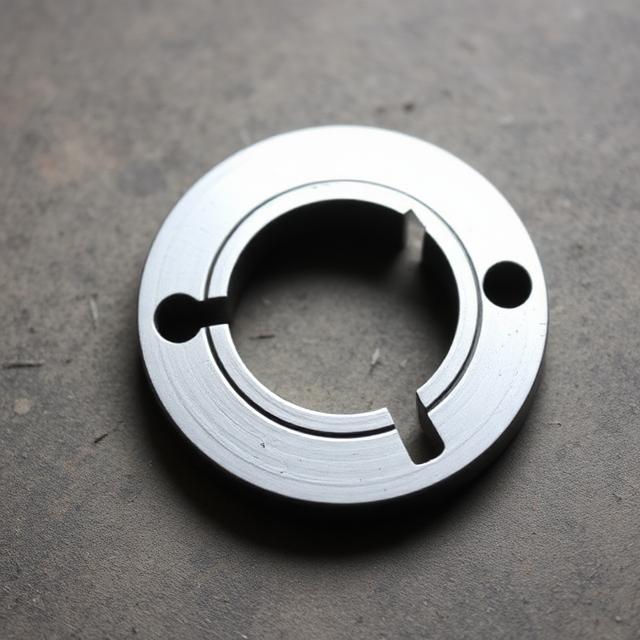
If you’ve ever assembled machinery, furniture, or a car part, you’ve probably handled a split lock washer without thinking twice about it. It’s one of the most common small parts in any toolbox.
But here’s something most DIYers don’t know: engineers have argued for decades about whether a split lock washer actually does what it’s sold to do. This guide breaks down what a split lock washer is, how it works, where it shines, and where the science says it falls short.
What Is a Split Lock Washer?
A split lock washer is a ring-shaped piece of spring steel that has been cut at one point and twisted, so it no longer sits flat. That single break, sometimes called the “split,” is what separates it from a plain flat washer.
Industry sources also call it a spring lock washer or split ring washer. It’s a helically split ring with open ends that dig into the fastener and joint material to resist rotation, and its primary job is to keep fasteners in light-duty applications from backing out on their own.
You’ll usually find it placed under a nut or bolt head, between the fastener and the surface it’s clamping. It’s a small part, but it plays a specific mechanical role in many bolted assemblies.
Split Lock Washer Design and Shape
The washer’s shape is what gives it its name. Instead of a flat ring, it looks like a single coil of a spring, cut at one point so the two ends sit at slightly different heights.
Because of that broken helical shape, the washer isn’t flat by default — it has a raised, non-uniform profile, and that shape is what lets it exert a spring-like force once it’s flattened during installation. This raised profile is the entire mechanical principle behind the part.
How Does a Split Lock Washer Work?
When you tighten a bolt or nut down onto a split lock washer, the washer gets squeezed flat. As it flattens, it stores energy the same way a small spring does.
In simple terms, a lock washer prevents bolts and nuts from loosening due to vibration or stress by either creating tension or increasing friction. For the split design specifically, two things happen at once:
- Spring tension: The flattened washer keeps pushing outward against the bolt head and the work surface, trying to maintain clamp force.
- Edge bite: The sharp, twisted ends of the split can dig slightly into softer mating surfaces, adding a bit of resistance to rotation.
When the bolt is fully torqued, the split washer exerts a continuous spring force, compensating for any loosening tendency and disrupting rotation of the nut or bolt head. That’s the theory behind the design, and it’s been the standard explanation in fastener catalogs for generations.
The Spring Action Explained
Think of the split lock washer as a single-coil spring squashed flat. As long as the bolt stays tight, the washer keeps a small amount of outward pressure on the joint.
If the bolt starts to stretch slightly — say, from heat cycling or settling — the washer’s stored spring force is supposed to take up that slack and keep the clamp force from dropping to zero. That’s different from stopping the bolt from physically rotating loose, which is a separate failure mode entirely.
Split Lock Washer Types and Standards
Not every split lock washer is built the same. In the U.S., the part is governed by a specific engineering standard, and it comes in several series.
Split spring lock washers are produced in four series: regular, heavy, extra duty, and hi-collar. Each series uses a different wire gauge and overall thickness, which changes how much spring force the washer can deliver.
You’ll typically see split lock washers specified under one of these standards:
| Standard | Region | Notes |
|---|---|---|
| ASME/ANSI B18.21.1 | United States (inch series) | Covers carbon steel, boron steel, and stainless steel grades |
| DIN 127 | Europe (metric) | Common split-type lock washer standard |
| DIN 7980 | Europe (metric) | Heavy-duty split lock washer variant |
Under ASME B18.21.1, split lock washers are made from material that meets specific chemical composition requirements, with options including carbon steel, boron steel, and two grades of stainless steel. That standard is also the easiest reference point if you’re ordering for an engineering project that needs a documented split lock washer spec sheet.
Common Materials and Finishes
Most split lock washers ship in one of these material/finish combinations:
- Carbon steel, zinc-plated — the everyday choice for general indoor assembly
- Stainless steel (304/A2 or 316/A4) — used outdoors or anywhere corrosion is a concern
- Phosphor bronze or silicon bronze — used in marine or electrical grounding applications
- Hardened alloy steel — used where higher spring force is needed
Split Lock Washer vs. Other Lock Washers
Split isn’t the only style of lock washer on the market. Here’s how it stacks up against the other common types.
Suggested read: GE Top Load Washer vs. GE Front Load Washer: Which Should You Buy?
| Washer Type | Locking Mechanism | Best Surface | Typical Use |
|---|---|---|---|
| Split lock washer | Spring tension + edge bite | Soft to medium metals | General-purpose, light vibration |
| Internal tooth washer | Teeth bite into surface | Soft materials, small heads | Electrical grounding, sheet metal |
| External tooth washer | Teeth bite into surface | Larger fastener heads | Load spread over larger diameter |
| Wedge lock washer | Interlocking cam ridges | Hard, smooth surfaces | Heavy vibration, structural steel |
| Belleville (conical) washer | Constant spring preload | Bolted joints needing preload | Thermal cycling, settling joints |
Split lock washers may not distribute load as evenly as flat washers, so for higher-load applications, pairing a split lock washer with a flat washer is a common workaround. The flat washer protects the surface while the split washer still contributes its spring tension.
Do Split Lock Washers Actually Work? The NASA Controversy
This is where the split lock washer story gets interesting — and where a lot of the marketing copy doesn’t match the engineering data.
A NASA study from 1990, titled “Self-Loosening of Threaded Fasteners,” found that split lock washers provided minimal benefit against transverse vibration loosening, which is the most common cause of fastener failure in mechanical assemblies. NASA’s reasoning comes down to a simple distinction:
“The spring action of split washers only resists tension loosening (bolt stretching). Transverse vibration causes rotation loosening through entirely different mechanics that spring tension doesn’t address.” — paraphrased from NASA fastener research findings
Independent testing backs this up. Gerhard Junker developed a vibration test back in the 1960s that shakes a bolted assembly until it loosens, and his early results showed split ring lock washers loosened roughly twice as fast as joints with no washer at all.
This isn’t just internet forum talk, either. One often-cited engineering reference is NASA’s fastener design guide, which explicitly calls split-ring lock washers useless for preventing loosening, alongside toothed star washers, because both rely on a mechanism — biting into the mating surface — that breaks down once the surface is too hard.
Where Split Lock Washers Still Make Sense
None of this means a split lock washer is useless in every situation. Split ring washers do work best on softer materials, since it’s easier for their sharp edges to dig in, but they’re ineffective on joints carrying heavy dynamic loads or joints that require lubrication, since lubrication promotes sliding rather than biting.
In practice, that means a split lock washer can still be a reasonable, low-cost choice for:
- Light-duty furniture and cabinetry hardware
- Low-vibration electronics enclosures
- General DIY repairs where a small margin of insurance is wanted
- Applications using softer base metals like aluminum or brass
Case Study: Rowing Equipment Manufacturers Drop the Split Washer
A real example of this shift in thinking comes from competitive rowing equipment. A major rigging manufacturer found that a NASA manual studied this exact loosening problem and concluded the split lock washer was all but useless, with no scientific evidence that it adds meaningful friction or locking effect. Their testing showed a plain flat washer performed just as well as a flat-plus-split combination, with the real determining factor being how tight the nut was torqued in the first place.
That’s a useful takeaway for any application: torque and thread-locking method usually matter more than which washer you grab.
When Should You Use a Split Lock Washer?
Given the mixed evidence, here’s a practical way to decide:
| Situation | Recommended Approach |
|---|---|
| Light vibration, soft material, low cost priority | Split lock washer is acceptable |
| Heavy vibration, safety-critical joint | Use thread-locking adhesive or prevailing-torque nut instead |
| Hard, smooth, or lubricated surfaces | Skip the split lock washer — it won’t bite |
| Structural steel, aerospace, automotive critical points | Use engineered alternatives (see below) |
Lock washers are often used in the transport industry when fastening components in cars, planes, and marine vessels, since fasteners in those settings can easily loosen from vibration. Just keep in mind that “often used” historically isn’t the same as “best engineering practice” today — many of those industries have since shifted toward other solutions.
How to Install a Split Lock Washer Correctly
If you do choose to use one, installing it correctly matters more than the washer itself. Follow these steps:
- Position the washer on the bolt or screw shaft, centered between the nut and the surface.
- Add a flat washer first if you want to protect the mating surface, placing the flat washer against the material.
- Thread the nut down until it just contacts the lock washer.
- Hand-tighten, then use a wrench or torque wrench to bring the fastener to the specified torque value.
- Inspect the washer to confirm it has fully flattened, which shows it’s engaged correctly.
For effective use, select the appropriate split lock washer for the fastener size and load conditions, avoid over-tightening to prevent damage, and inspect washers for wear before reuse.
A few extra installation tips worth remembering:
- The sharp edge of the split should face the bolt head or nut for the best possible bite.
- Never reuse a washer that’s already fully compressed and deformed from a prior installation.
- Match washer material to bolt material to avoid galvanic corrosion between dissimilar metals.
Split Lock Washer Sizes (General Reference)
Split lock washers are sized by the nominal bolt diameter they’re meant to fit. Below is a simplified reference for common inch-series sizes — always confirm exact dimensions against the current ASME B18.21.1 table for engineered work.
| Nominal Bolt Size | Approx. Inside Diameter | Approx. Outside Diameter |
|---|---|---|
| #6 | 0.141 in | 0.247 in |
| #10 | 0.194 in | 0.334 in |
| 1/4 in | 0.255 in | 0.489 in |
| 3/8 in | 0.384 in | 0.680 in |
| 1/2 in | 0.513 in | 0.869 in |
Split lock washers under ASME B18.21.1 (and the metric equivalents DIN 127 / DIN 7980) add spring tension and an edge bite that helps resist rotation under mild vibration, though for critical vibration environments, modern prevailing-torque nuts or wedge-locking systems are often recommended instead.
Pros and Cons of Split Lock Washers
Advantages:
- Inexpensive and widely available in nearly every hardware store
- Easy to install with no special tools required
- Provides shock absorption that helps distribute force evenly across the fastener and surface
- Works reasonably well on soft materials and low-load assemblies
- Familiar to nearly every assembler, reducing training needs
Drawbacks:
- Toothed and split washers can cause failure when their edges dig into a surface and create cracks
- Limited or no benefit against transverse (rotational) vibration loosening
- Not effective on hardened, lubricated, or very smooth surfaces
- Generally not designed to be reused once compressed or deformed
- Can give a false sense of security in safety-critical assemblies
Alternatives to Split Lock Washers
If your application involves real vibration risk, engineers typically reach for one of these instead:
- Thread-locking adhesive (such as a removable-strength threadlocker) for permanent or semi-permanent joints
- Prevailing-torque (nylon-insert) nuts for a mechanical friction lock that doesn’t rely on surface bite
- Wedge-lock washer pairs for heavy-vibration structural and automotive joints
- Safety wire or cotter pins for aerospace and high-reliability assemblies
- Properly specified torque values, since under-torquing is the leading cause of self-loosening regardless of washer choice
Ready to Upgrade Your Fastening Setup?
Whether you’re stocking a workshop or specifying parts for a production line, choosing the right split lock washer — or the right alternative — makes a real difference in how long your assembly stays tight. Compare sizes, materials, and standards before your next order, and match the washer to the actual vibration profile of your application rather than habit alone.
FAQs About Split Lock Washers
What is a split lock washer used for?
A split lock washer is used between a nut or bolt head and a mating surface to add spring tension to a fastened joint, with the goal of resisting loosening from vibration or minor settling.
Do split lock washers actually prevent bolts from loosening?
Independent testing, including NASA fastener research, has found that split lock washers offer little to no protection against rotational vibration loosening, though they may add some minor resistance in soft-material, low-vibration settings.
Can a split lock washer be reused?
It’s not recommended. Once a split lock washer has been fully compressed and flattened, it loses much of its spring tension, so a new washer should be used during reassembly.
What’s the difference between a split lock washer and a flat washer?
A flat washer is solid and distributes load evenly across a surface, while a split lock washer has a cut and twist that lets it act like a small spring under compression.
Which side of a split lock washer goes against the bolt?
The sharp, raised edge created by the twist should face the bolt head or nut, since that orientation gives the washer the best chance at gripping the surface.
Are split lock washers still recommended for aerospace or critical assemblies?
No. Most aerospace and high-reliability engineering standards have moved away from split lock washers in favor of thread-locking compounds, prevailing-torque nuts, or safety wire.
Leave a Reply