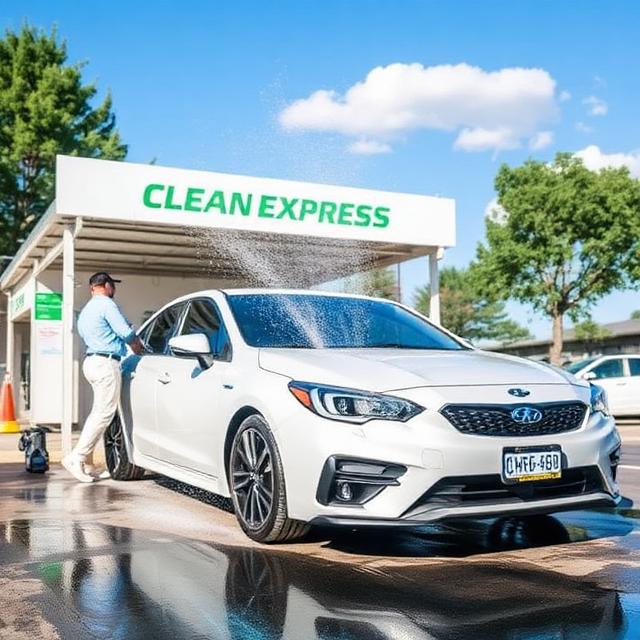
Clean Express Auto Wash — Part 28: Redefining Eco-Friendly Car Care Through Innovation and Community Focus

The modern driver wants more than a shiny car. Today’s consumer expects speed, value, and a tangible commitment to the environment — all without compromise. Clean Express Auto Wash has positioned itself precisely at this intersection, branding itself not just as a car wash chain but as a sustainability-forward, technology-driven service that respects both community water supplies and the customer’s time. In this Clean Express Auto Wash — Part 28 installment, we examine how the company’s water-saving infrastructure, green chemistry choices, membership philosophy, and regional expansion are reshaping perceptions of what an express car wash can be.
The Express Wash Revolution: Convenience Meets Sustainability
Express exterior car washes have surged in popularity across the United States, largely because they remove friction from a traditional chore. Drivers remain in their vehicles, conveyor belts guide them through a tunnel of precisely calibrated equipment, and within three to five minutes they emerge with a clean, dry car. Clean Express Auto Wash amplifies this model by merging speed with a stated commitment to environmental stewardship — an approach that appeals particularly to markets in Ohio and Pennsylvania where water quality and conservation are increasingly part of public conversation.
Unlike older self-serve bays or full-service hand washes that use uncontrolled amounts of water per vehicle, the express model thrives on standardization. Every pass through the tunnel follows a predictable, optimized sequence. This allows Clean Express to measure and minimize resource use in ways that hand washing cannot. The convenience factor — open long hours, no appointment needed — combined with visible eco-initiatives creates a compelling value proposition for everyday motorists and fleet operators alike.
Water Reclamation System: The Core of Eco-Friendly Express Car Wash Operations
Direct answer: Clean Express Auto Wash describes its closed-loop water reclamation systems as infrastructure that captures, filters, treats, and reuses a high percentage of the water used during each wash cycle. This approach is designed to reduce demand on municipal supplies and limit storm drain discharge.
The process begins beneath the wash tunnel. Multiple collection drains segregate water based on contamination levels. Light rinse water, moderately soiled wash water, and heavy sludge are separated at the source. The moderately used water passes through mechanical screens to remove grit, then moves into multi-stage settling tanks where finer particulates drop out. From there, water is filtered, treated with ozone or specialized cleansing agents to neutralize bacteria and odors, and then returned to the high-pressure spray arches for primary cleaning stages.
Freshwater is reserved almost exclusively for the final spot-free rinse — a low-volume application that prevents mineral spotting on vehicle surfaces. This tiered approach means that a single car’s wash may consume a fraction of the fresh water used in a typical at-home driveway wash, which some EPA WaterSense estimates suggest can use 40 gallons or more while sending untreated soap directly into storm drains. Clean Express has also publicly referenced rainwater harvesting at select new builds, capturing rooftop runoff into storage tanks for non-potable uses such as landscaping irrigation around the property.
Unlimited Wash Membership: The Backbone of the Ohio Car Wash Experience
The unlimited wash membership sits at the heart of the Clean Express business strategy. For a flat monthly fee, members can wash their vehicle as often as they like across any company-owned location. This subscription-style model generates predictable recurring revenue — valuable for funding ongoing infrastructure improvements and water system maintenance — and creates strong customer retention.
Benefits extend beyond price. Members receive an RFID windshield tag that automatically activates the wash gate, eliminating the need to lower a window or fumble with a phone. The program is contract-free: customers can cancel anytime, which reduces the psychological barrier to signing up. Clean Express often bundles exclusive perks such as discounted full-detail upgrades, seasonal protectants, and early access to new location openings. Based on company-published pricing, the membership may pay for itself after approximately two visits when compared to à la carte single-wash rates, though actual savings depend on the plan selected and frequency of use.
From a retention standpoint, the frictionless experience of “drive in, get clean, drive out” encourages habitual use. When a member knows they can pop into any location without an incremental charge, they’re more likely to maintain a clean vehicle, which in turn strengthens brand affinity and reduces the likelihood they’ll test competitors.
Green Chemistry: Biodegradable Detergents and Responsible Runoff Management
Direct answer: Clean Express Auto Wash states that it formulates its wash process around biodegradable, non-caustic, and phosphate-free detergents. All liquid runoff is routed through separation infrastructure before discharge, with systems designed to align with U.S. EPA NPDES guidelines and minimize ecological impact.
Traditional car soaps can contain phosphates and harsh surfactants that fuel algae blooms in freshwater bodies and strip protective wax layers from vehicles. Clean Express has described transitioning its chemical suite to plant-derived and readily biodegradable ingredients. These agents aim to maintain strong cleaning performance by targeting road film, brake dust, and insect residue without relying on aggressive alkalis or solvents.
Suggested read: Clean Express Auto Wash — Part 24: Driving Sustainability and Community Impact Through Advanced Eco-Friendly Car Washing
Runoff management is equally emphasized. The wash tunnel’s gutter network directs water through oil-water separators — baffled tanks where lighter petroleum residues float to the top and heavier solids sink. Only treated, clarified water moves forward in the system. During maintenance shutdowns or heavy storms, on-site retention basins capture excess flow so that untreated water does not escape into public waterways. This layered infrastructure is presented by the company as evidence of its environmental diligence, countering concerns about greenwashing through visible, on-site engineering at each location.
Tech-Driven Convenience: RFID, App Payments, and Free Vacuums
Technology integration at Clean Express is practical rather than flashy, designed to shave time and eliminate points of friction. RFID tags on windshields communicate with readers at the entrance, verifying active memberships and letting cars flow through without stopping. For non-members, a mobile app supports single-wash purchases, upgrade packages, and gift subscriptions — all with contactless payment stored securely.
Complimentary high-powered vacuums are a standout feature in the post-wash area. Clean Express offers covered vacuum stations with industrial suction units that customers can access freely after their wash — a different approach from some competitor chains that charge per minute for vacuum use. This amenity requires ongoing electricity and maintenance labor, but the goodwill it generates is substantial. Families in particular appreciate the ability to clean interior crumbs and pet hair without feeding coins into a machine.
Example of the efficient flow: A member drives up, RFID gates open automatically, the vehicle passes through the tunnel in under four minutes, then pulls to a complimentary vacuum bay. While the driver tidies the interior, the exterior has already been dried by automated blowers and microfiber systems. No staff intervention is needed beyond occasional equipment checks — a model that keeps throughput high even during peak Saturday hours, according to the company’s operational descriptions.
Expanding the Footprint: New Locations in Ohio and Pennsylvania
Clean Express Auto Wash has accelerated its regional expansion strategy, targeting high-traffic corridors in Ohio and Pennsylvania. Recent site openings and planned groundbreakings cluster around suburban retail hubs, near grocery-anchored shopping centers where daily errands naturally align with a quick wash stop.
Site selection is not accidental. The company evaluates municipal water regulations, traffic counts, and demographic alignment with the membership model. By working closely with local planning commissions, Clean Express addresses land-use concerns — such as noise from dryers and the routing of delivery tankers — before breaking ground. In several communities, the arrival of a Clean Express location has been accompanied by new employment opportunities, including roles in customer service, equipment maintenance, and site management.
As the footprint grows, the network effect strengthens the membership value. Drivers who commute between metro areas where Clean Express operates — such as between Cleveland and Pittsburgh, where the company has established or planned locations — can use the same membership across multiple sites. This cross-city utility broadens the addressable market and encourages adoption among drivers who previously considered an express wash a single-location convenience.
Competitive Landscape: How Clean Express Stacks Up Against Mister Car Wash
Mister Car Wash is an obvious comparison point — a publicly traded, nationally recognized chain with a broad footprint. Clean Express differentiates along several dimensions, though independent verification of all comparative claims is limited:
- Regional Focus: While Mister Car Wash operates across the United States, Clean Express deliberately concentrates on Ohio, Pennsylvania, and contiguous markets. This regional density can enable tighter operational control and faster response to local water quality regulations.
- Water Reclamation Emphasis: Both chains advertise water recycling practices. Clean Express has woven reclamation infrastructure prominently into its brand identity and site-level communications from early builds in Ohio, according to company materials.
- Membership Flexibility: Clean Express promotes a no-contract philosophy prominently. Mister Car Wash also offers unlimited plans, but consumer perception research cited by the company frames Clean Express as lower commitment — a subtle marketing advantage that may reduce sign-up hesitation.
- Free Vacuums as Standard: Clean Express bundles complimentary vacuum access at its locations. By contrast, many Mister Car Wash sites operate paid vacuum stations or time-limited access, positioning the Clean Express wash trip as a more complete exterior-plus-interior experience at one price point.
- Pricing Tiers: Clean Express typically structures a small number of clear membership levels based on protectants and wax sealants. Mister Car Wash offers a wider array of add-ons, which may become complex for some customers. Simplification may serve Clean Express in converting first-time visitors into subscribers.
Neither chain is immune to customer feedback; both face occasional reviews citing equipment hiccups or dry streaks. Clean Express’s narrower geography may provide some insulation from the operational strain of managing hundreds of far-flung sites, potentially enabling a more hands-on approach to quality assurance at existing locations.
Frequently Asked Questions
How does Clean Express Auto Wash recycle water?
The wash uses a closed-loop water reclamation system that captures, filters, and treats a substantial portion of water used per vehicle, reducing freshwater consumption and runoff. Multi-stage settling, filtration, and treatment processes prepare the water for reuse in high-pressure spray cycles, with fresh water reserved for the final spot-free rinse. Specific percentages cited by the company are based on internal operational data.
Are the cleaning chemicals safe for the environment?
Clean Express states that it uses biodegradable, non-caustic, and phosphate-free detergents. All runoff is directed through oil-water separators and settlement tanks before discharge, with infrastructure designed to align with EPA guidelines. For further context on water quality standards, refer to EPA water quality criteria.
What does the unlimited wash membership include?
Members enjoy unlimited exterior washes per month at any location, no long-term contracts, RFID windshield tags for quick entry, and exclusive discounts on additional services like interior detailing or seasonal treatments. Pricing details and current offers are available on the official Clean Express website or mobile app.
Can I really wash my car every day without harming the paint?
According to company materials, the wash uses soft closed-cell foam brushes and high-quality microfiber drying cloths which are cleaned frequently. The process is designed to be gentle on clear coats. Regular washing also helps remove contaminants such as bird droppings and road salt that can degrade paint over time if left untreated.
Suggested read: Clean Express Auto Wash — Part 29: Pioneering Eco-Friendly Innovation in Express Car Wash
Is Clean Express Auto Wash expanding to my city?
The company is actively expanding across Ohio and Pennsylvania, with multiple new sites in various stages of development. Visit the official website or mobile app for a current location finder, upcoming openings near you, and membership launch specials.
Conclusion: Forward-Thinking Car Care Hitting Its Stride
<p
Leave a Reply