In this guide
How to Wash Hardwood Floors with a Machine: A Step-by-Step Guide
Hardwood floors can be cleaned more thoroughly with a machine than with a traditional mop and bucket—but the wrong approach can warp, scratch, or dull the finish. The key is to use a machine that picks up dirty water as quickly as it dispenses it, and to prep the floor with a dry pass first. Here’s how to do it safely.
Before You Run a Machine: Prep Is Critical
Clear the Room and Inspect the Floor
Remove furniture and rugs before you clean [1]. A machine is only as effective as the space you let it work in, and moving obstacles also prevents you from needing to go back over the same section.
Next, vacuum thoroughly, paying special attention to corners and edges where dust tends to accumulate [1]. If you have loose debris left on the floor, a wet machine will turn it into mud. That can leave streaks and make the machine work harder than it should.
Finally, inspect the floor for scratches, gouges, and worn finish. Address any damage before washing. Once the finish is worn through, moisture from a machine can penetrate into the wood and cause swelling [1]. If you see worn spots, consider repairing them before you wet-clean.
Use the Right Dry-Cleaning Tool First
A broom and dustpan, or a vacuum set to a bare-floor setting, will get the pile of debris off the floor and into the trash [5]. For a vacuum, look for one with a soft roller head designed for hard floors and sealed filtration, so fine dust stays in the machine instead of being blown back onto the wood [1]. If your vacuum has a brush roller that can be switched off or retracted, use that setting on hardwood, because brush rollers meant for carpet can scratch wood [2].
Choosing the Right Machine
Not every floor-cleaning machine is safe for hardwood. Here is what each type does and whether it belongs in your routine.
Standard Vacuums: Dry Debris Only
Standard vacuums use suction to lift soil and debris from the floor, but they do not use water or cleaning solution [2]. They are essential for removing dry dirt before a wet-cleaning pass. For hardwood, choose a model with a soft roller attachment and the ability to turn off any carpet-style brushes [2].
Wet-Dry Vacuums and Wet-Cleaning Machines
Wet-dry vacuums dispense a cleaning solution dissolved in water, then suction the dirty water back up off the floor [2]. This is the safest category for washing hardwood because it minimizes standing moisture. Look for a machine that has separate tanks for clean water and dirty water [1]. That separation helps keep your cleaning solution clean and makes it easy to empty the dirty water when you're done [2].
Some machines also pick up wet and dry debris in one pass. The Dyson WashG1™ Wet Cleaner, for example, is designed for hard floor maintenance and has separate tanks for clean and dirty water [1]. If you are considering a specific wet cleaner, verify the current model, accessories, and compatibility with your floor finish by checking the manufacturer or retailer listing, because product details change over time.
When you use a wet machine, pick a cleaning solution appropriate for hardwood. If you use the Dyson wet cleaner, the Dyson 02 Probiotic hard floor cleaning solution is formulated for hardwood floors [1]. If you use a different machine, check the manual for recommended cleaners. In general, a specialized hardwood cleaner or a simple solution of liquid soap and water works well on wood floors [5]. Avoid products with caustic ingredients like bleach or vinegar, skip abrasive cleaners like baking soda, and never use products that add shine or luster—those can interfere with future wood-floor finish [5].
Commercial Floor Scrubbers
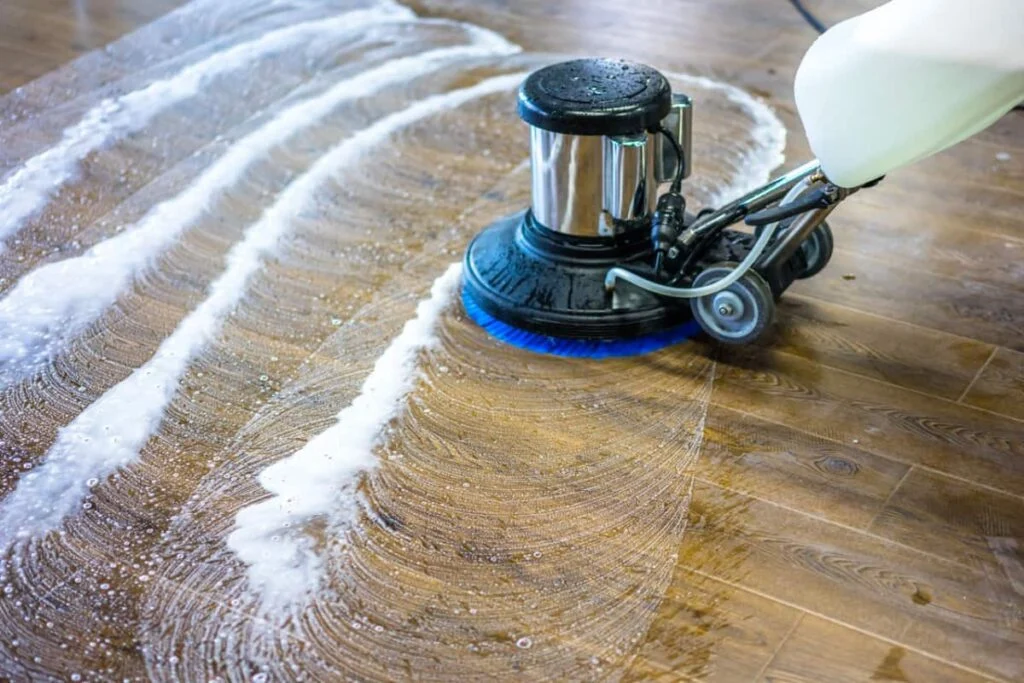
For large areas or commercial spaces, professional-grade floor scrubbers can safely clean sealed hardwood when you use the correct brushes and cleaning solution [3]. If you look at commercial machines, choose lower RPMs around 175 for gentle cleaning of delicate hardwoods, and a wider cleaning path for faster coverage of large areas [3]. Because these machines are heavy and often require specific pads, confirm with the supplier that the machine and brushes are compatible with sealed hardwood before buying or renting.
Robotic Vacuums and Mops
Robotic vacuums and mops move automatically through the home and can perform both wet-mopping and vacuuming, usually controlled by a remote, app, or voice commands [2]. They are convenient, but every model is different. If you use a robot mop on hardwood, confirm that it has a hardwood setting and follow the manufacturer's instructions for water use. Do not assume that a robot mop is safe just because it is a robot.
Suggested read: How to Install a Pressure Washer Hose Reel: A Step-by-Step Guide
Spin Mops and Scrubbing Machines
Some machines use dual spinning mopheads with pads. The rapid rotation scrubs sticky messes and can leave a shiny surface appearance [2]. That “shine” is from cleaning, not from a polish—so don’t confuse it with the shine-and-luster products that the National Wood Flooring Association advises against [5]. If you use a spin mop or scrubbing machine, do it in small sections and keep the pads barely damp. Spinning pads can also redistribute dirty water if you don’t rinse or replace them frequently.
Steam Cleaners: Skip Them
Steam cleaners heat water to produce pressurized steam and can clean without chemical solutions [2]. But despite the marketing, you should not use steam cleaners on wood floors. Steam deposits moisture between the cracks of the flooring and can warp the boards [5]. Even a steam mop sold as “safe for hardwood” is a risk. Use a wet-dry machine instead.
Step-by-Step Machine Washing
Once you have the right machine, follow this sequence to limit water exposure and get a clean, streak-free floor.
Step 1: Dry Vacuum or Sweep First
Run a vacuum with a bare-floor setting or use a broom and dustpan [5]. This removes the loose grime that could scratch the floor or turn into a paste when you apply water.
Step 2: Prepare the Cleaning Solution Carefully
If you are using a concentrated cleaner, follow the label’s dilution instructions. For example, one multi-surface cleaner guide says that for cleaning and deodorizing wood floors, you can dilute ¼ cup (2 fl. oz.) per gallon of warm water in a bucket, or use it full-strength for soap scum and greasy soils—but if you use it full-strength, always rinse thoroughly with clean water [6]. For disinfecting wood floors, the same guide recommends pre-cleaning the surface, leaving the cleaner on the floor for six minutes, then wiping it away with a clean mop [6].
Always use any cleaning product as directed on the label [6]. If the label does not say it is safe for hardwood, don’t use it. And if your machine has a solution tank, use only the cleaner recommended by the machine manufacturer. That protects both the machine and your floor finish.
Step 3: Wash in Small Sections, Moving Backward
Start at the far end of the room and work backward so you don’t step on sections you have already cleaned [5][6]. Use wide, even strokes. The goal is to spread the cleaning solution in a thin layer that dries quickly, rather than flooding the floor [5].
If you are using a wet-dry machine, move it at a steady pace. Let it dispense the solution and immediately suction the dirty water back up. Pausing or lingering in one spot can let moisture sit too long, which is exactly what you want to avoid.
Step 4: Empty the Dirty-Water Tank
Machines with wet-mopping functions have a dirty-water tank that collects used water. Empty the tank when it becomes full, and always empty it after you finish [2]. Leaving dirty water sitting in the tank can cause odors and can make the next cleaning session less effective. Check the manufacturer’s manual for the proper emptying and rinsing procedure.
Step 5: Let the Floor Dry Completely
After you finish, let the floor dry before you walk on it [5]. Even with a machine that suction-dries, some moisture remains. If you need to do a second pass, wait for the first pass to dry so you can see whether you still have streaks.
How Often Should You Machine-Wash Hardwood Floors?
There is no single schedule that works for every home. A cleaner manufacturer’s guide for deep cleaning and disinfecting wood floors suggests a more thorough clean every 1 to 2 weeks [6]. That may be appropriate for high-traffic areas or homes with pets. In lower-traffic spaces, you may be able to go longer. The most important factor is to avoid soaking the floor. Machine washing with a wet-dry vacuum is generally best as a periodic deeper clean, not a daily routine. For everyday dust, sweep or vacuum with a bare-floor setting [5].
Common Mistakes to Avoid
– Using a standard wet mop with a bucket of standing water. If water sits on the floor, it can leak through and warp the wood [5]. Use a machine that dispenses and picks up water in the same pass.
– Using a steam cleaner on hardwood. Steam will drive moisture into the floorboards and can warp them [5].
– Using brush rollers that are meant for carpet. Those can scratch hardwood. Switch them off or use a separate soft roller head [2].
– Using vinegar, bleach, baking soda, or abrasive powders. Vinegar and bleach are caustic ingredients, and baking soda is abrasive—all can damage the finish [5].
– Using a shine or luster product. These products can make it difficult to apply a future wood-floor finish [5].
– Skipping the dry pass. Always vacuum or sweep before you wash, so fine debris can’t scratch the wood while the machine is moving.
When to Skip Machine Washing
If your floor has damaged or worn finish, address that issue before using any wet machine, because moisture can penetrate the wood [1]. If your floor manufacturer or warranty instructions specify a cleaning method, follow those instructions instead. Unfinished hardwood should generally be treated differently from sealed hardwood—verify with the manufacturer before cleaning with water.
The Bottom Line
Washing hardwood floors with a machine is a good way to get a deeper clean without over-saturating the wood. Use a vacuum or broom first, then use a wet-dry cleaner with separate clean and dirty water tanks, a hardwood-safe solution, and soft or retracted brushes. Never steam-clean. And let the floor dry completely before you walk on it.
If you are buying or renting a specific machine, check the current manufacturer or retailer listing for model-year details, package contents, and compatibility with hardwood floors. Not every machine is designed for every floor type, so when in doubt, follow the floor manufacturer’s care instructions.
Suggested read: Hotpoint Washer and Dryer Troubleshooting: A Step-by-Step Guide
—
Sources
1. How to Clean Hardwood Floors: A Step-by-Step Guide | Dyson US
2. The Best Hardwood Floor Cleaner Machines, Tested and Reviewed | Bob Vila
3. Hardwood Floor Cleaner Machines for Commercial Spaces | Commercial Cleaning Depot
4. Hardwood Floor Cleaning Machine: The Complete Guide | Aiolith
5. How to Clean Hardwood Floors | Reviews by Wirecutter
6. How to Clean Wood Floors | Lysol US